

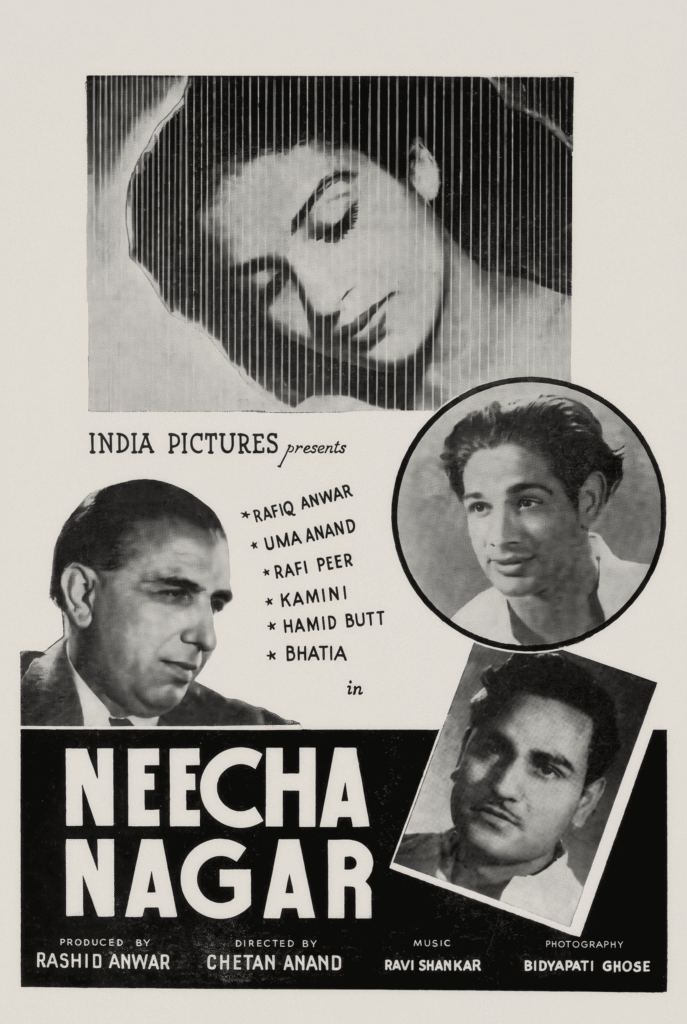
Original title: Neecha Nagar
Based on: Original story by Hayatulla Ansari
Director: Chetan Anand
Screenplay: Hayatulla Ansari
Cinematography: Bidyapati Ghosh
Music: Ravi Shankar
Cast: Rafiq Anwar, Uma Anand, Kamini Kaushal, Rafi Peer, S.P. Bhatia, Hameed Butt, Mohan Saigal, Zohra Sehgal, Mohan Segal, Brij Mohan Vyas
Filming locations: India
Subtitles: English (EN), Romanian (RO)
Synopsis and Main Themes: In a nameless Indian village divided between the prosperous upper city — Ooncha Nagar — and the impoverished lower settlement — Neecha Nagar — a powerful industrialist named Sarkar plans to divert a stream of polluted water through the slum to drain land he covets for development. Balraj, a college-educated villager, leads the community’s resistance, joined by Sarkar’s own daughter. The film is an allegory of class exploitation, collective resistance, and the complicity of wealth — set against the backdrop of India’s independence struggle and drawing loosely on Maxim Gorky’s The Lower Depths.
About the Director and Cinematic Style: Chetan Anand was born in 1915 and came to cinema after working for the BBC in London and teaching at the Doon School in Dehradun. Neecha Nagar was his directorial debut, made under the influence of the Indian People’s Theatre Association — the progressive cultural movement that brought together writers, artists, and filmmakers committed to social change. The film’s visual language is expressionist rather than naturalistic: Bidyapati Ghosh’s cinematography uses stark contrasts, symbolic framing, and montage in a register closer to Eisenstein than to the emerging Hindi commercial tradition, and Ravi Shankar’s score — his first for a feature film — gives the film an additional cultural distinctiveness.
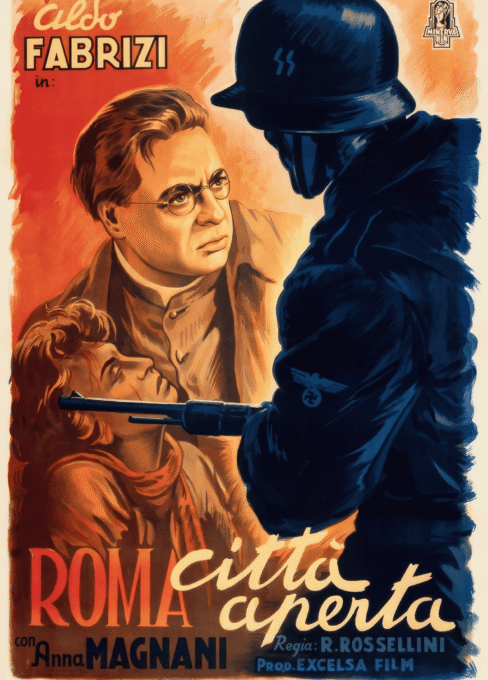
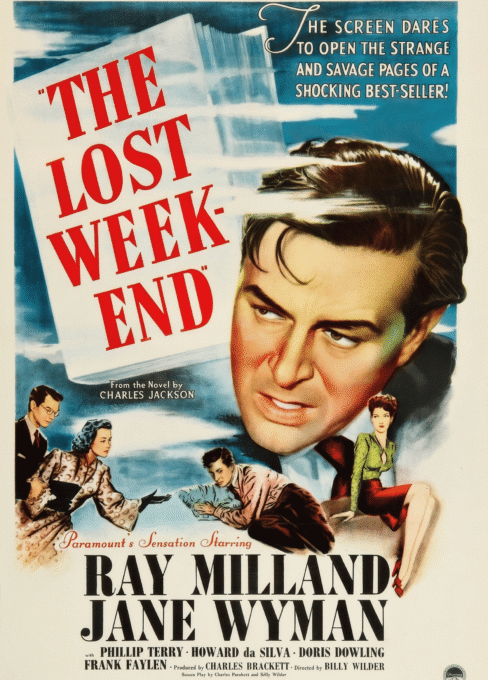
Critical Reception and Impact: Neecha Nagar shared the Grand Prix du Festival at the inaugural Cannes Film Festival in 1946 — the prize equivalent to the later Palme d’Or — alongside eleven other films, including Rossellini’s Rome, Open City, Wilder’s The Lost Weekend, and Lindtberg’s The Last Chance. It was the first Indian film ever to win international recognition at a major film festival. The film marked the screen debut of Kamini Kaushal and the first film score by Ravi Shankar. Satyajit Ray later wrote to Chetan Anand that Neecha Nagar had inspired him to persevere with his own filmmaking — a letter that preceded Pather Panchali by nearly a decade.
Historical Context and Cinematic Legacy: Neecha Nagar was made in 1945–46, at the height of India’s independence movement, and its allegory of an exploitative industrialist draining resources from the poor carried unmistakable political weight in a country still under British colonial rule. The college-educated Balraj who leads the villagers was read by contemporaries as modeled on Nehru. Despite its Grand Prix and its extraordinary pedigree — first feature by a major director, debut score by Ravi Shankar, debut performance by Kamini Kaushal — Neecha Nagar has remained one of the most unknown Cannes prize-winners in cinema history, largely absent from both Indian and international film culture. Its rediscovery by scholars and archivists in recent decades has begun to restore its place as a foundational work of Indian social cinema, and as evidence that the traditions of progressive filmmaking in India predate the Bengali New Wave by a full decade.
You cannot copy content of this page

It's free. No subscription required
Comments (0)
Please login to comment.
Please login to review.