

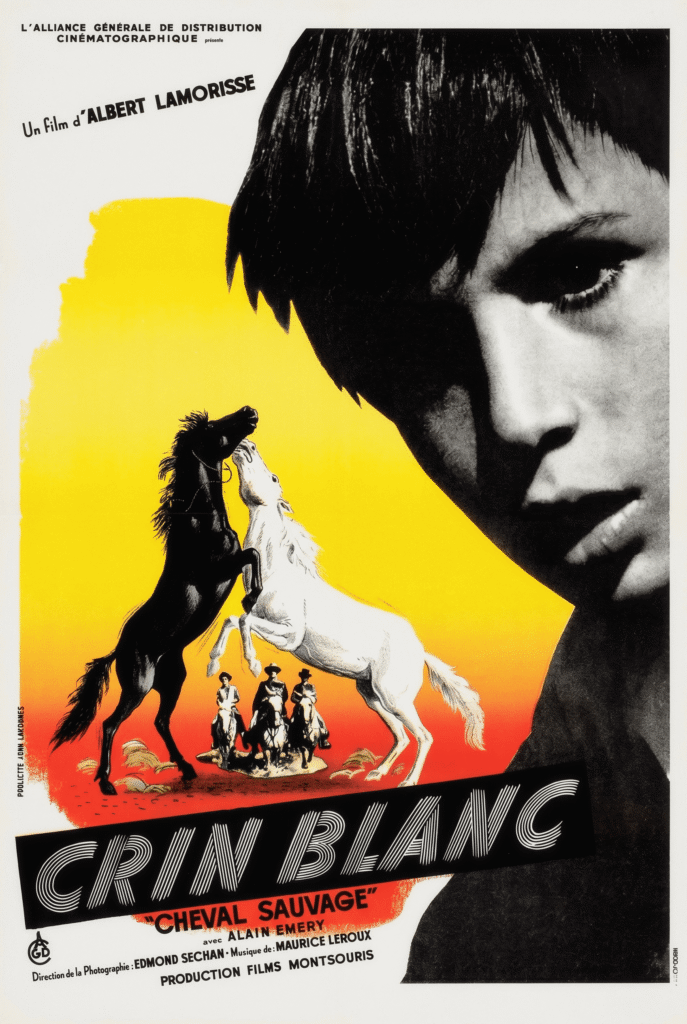
Original title: Crin blanc: le cheval sauvage
Based on: Original scenario by Albert Lamorisse; adaptation by Denys Colomb de Daunant
Director: Albert Lamorisse
Screenplay: Albert Lamorisse, Denys Colomb de Daunant; commentary: James Agee (English version)
Cinematography: Edmond Séchan
Music: Maurice Leroux
Cast: Alain Emery, Laurent Roche, Clan-Clan, Pascal Lamorisse, Francois Perie, Charles Guillaume, Alain Colomb Daunant, Denys Colomb de Daunant, Charles Fouhetty, Pierre Bestieux
Filming locations: Camargue, Bouches-du-Rhône, France
Subtitles: English (EN), Romanian (RO)
Synopsis and Main Themes: In the marshes of the Camargue in southern France, a magnificent white stallion leads a herd of wild horses and refuses to be broken by men. A young fisherman’s boy named Folco watches the horse evade his human pursuers and decides to win his trust. What begins as a boy’s dream of possession becomes something much deeper — a bond between two untamable natures that the world of men cannot accommodate. The film turns on freedom, loyalty, and the violence that civilization directs at anything that refuses to submit.
About the Director and Cinematic Style: White Mane is Albert Lamorisse’s second fiction film and the work that first brought him to international attention. Lamorisse came to cinema from photography and documentary, and his approach to White Mane carries that double formation: the Camargue landscapes are filmed with a documentary’s patience for the real, while the narrative moves with the compression and inevitability of a fable. Working almost entirely without dialogue, Lamorisse builds the relationship between Folco and the stallion through physical action, gesture, and the expressive photography of Edmond Séchan — whose images of horses galloping through marshwater became among the most recognizable in French postwar cinema.
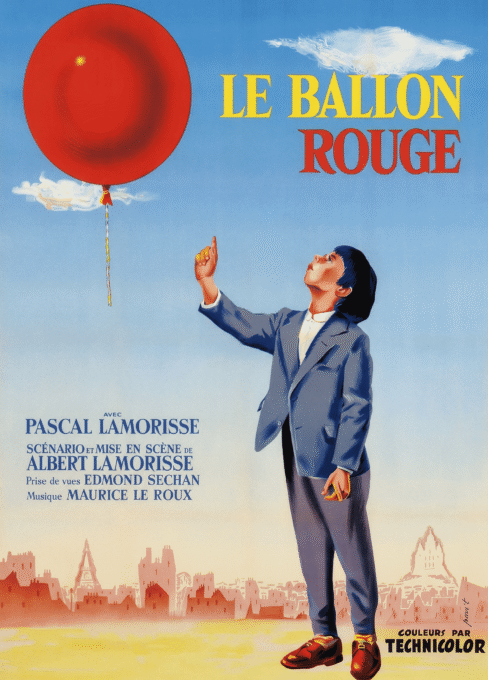
Critical Reception and Impact: White Mane received mixed reviews from French critics at the time of its release but won the Palme d’Or for Best Short Film at the 1953 Cannes Film Festival and the Prix Jean Vigo for short film the same year. It was also nominated for the BAFTA Award for Best Documentary Film in 1954. The film established Lamorisse as a filmmaker of international standing, laying the groundwork for The Red Balloon (1956), which would win the Palme d’Or at Cannes a second time and the Academy Award for Best Original Screenplay — the only short film ever to receive that honor.
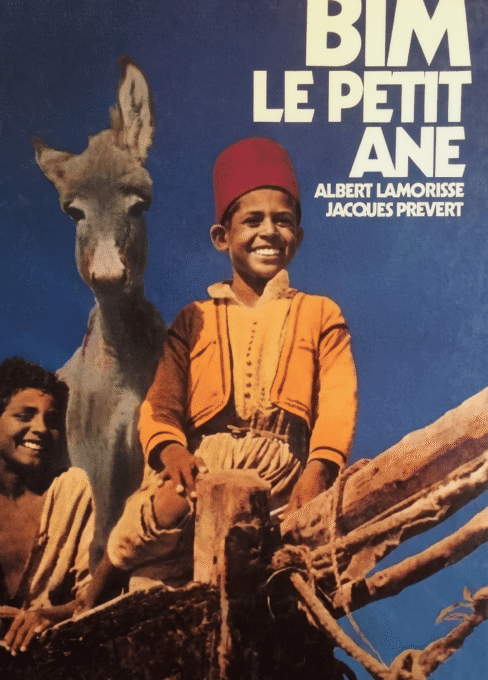
Historical Context and Cinematic Legacy: White Mane arrived at a moment when French cinema was in transition — between the classical tradition and the ferment that would become the New Wave — and its refusal of conventional narrative resolution placed it outside both. The ending, in which Folco and White Mane ride together into the sea rather than surrender to the men who pursue them, was unlike anything in mainstream children’s cinema: not a victory, not a defeat, but a departure into myth. The film circulated in French schools for decades alongside Bim and The Red Balloon, forming an unofficial trilogy of childhood and loss. Internationally, it influenced filmmakers working at the intersection of nature, childhood, and lyrical realism — Carroll Ballard, whose The Black Stallion (1979) owes an acknowledged debt to Lamorisse, among them. The Taiwanese director Hou Hsiao-hsien cited White Mane as a formative work.
You cannot copy content of this page

It's free. No subscription required
Comentarii (0)
Please login to comment.
Please login to review.