Synopsis and Main Themes: In the final months of World War II, two Allied officers — one British, one American — escape a German prison train in northern Italy and find themselves guiding an unlikely convoy of multinational refugees toward neutral Switzerland. Crossing the Alps on foot in winter, the group must confront exhaustion, betrayal, and moral sacrifice. At its core, the film meditates on solidarity across borders, the arbitrary cruelty of war, and the precarious fate of the stateless and displaced.
About the Director and Cinematic Style: Leopold Lindtberg was born in Vienna in 1902 into a Jewish family and trained as both actor and theatre director. Fleeing Nazi persecution in 1933, he settled in Switzerland and became the artistic cornerstone of Praesens-Film, directing his first feature in 1935. By 1945, he had developed a stripped-down, neorealist approach — minimal artificial lighting, non-professional or unknown actors, location shooting — that lends The Last Chance the texture of lived documentary rather than studio fiction.
Critical Reception and Impact: The Last Chance was an immediate international success, earning the Grand Prix du Festival at Cannes in 1946 — the festival's highest prize at the time, equivalent to the later Palme d'Or — as well as the International Peace Prize awarded the same year. In 1947, it received the Golden Globe for Best Film Promoting International Understanding. The New York Times critic Bosley Crowther praised it as a vivid, honest drama built on documented facts, while Alfred Hitchcock singled it out as a masterpiece of suspense.
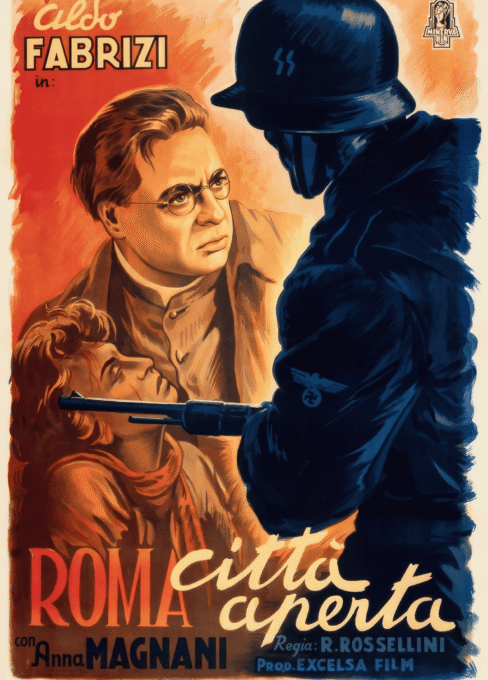
Historical Context and Cinematic Legacy: The Last Chance was produced in Switzerland during the final year of the war, at a moment when the fate of Jewish and civilian refugees remained desperately uncertain. Switzerland's own restrictive refugee policy — which turned away tens of thousands at its borders — gives the film an uncomfortable political edge that Lindtberg never entirely softens. The film sits alongside Rossellini's Rome, Open City (1945) as one of the earliest works to treat the European refugee crisis with neorealist immediacy. Though largely forgotten in subsequent decades, it has been reassessed as a foundational document of Swiss cinema and a rare wartime production willing to interrogate, rather than celebrate, the neutrality that sheltered it. A restoration by the Cinémathèque suisse and Schweizer Radio und Fernsehen brought the film back to Cannes Classics in 2016, reaffirming its place in the canon of humanist war cinema.
You cannot copy content of this page

It's free. No subscription required